
Discover Lyra Bet Casino Exclusive Offers Made for UK
18 October, 2026Een inleiding over casino welkomstpakketten
18 October, 2026Chicken Road slot Slot Special Symbols Detailed for UK Players
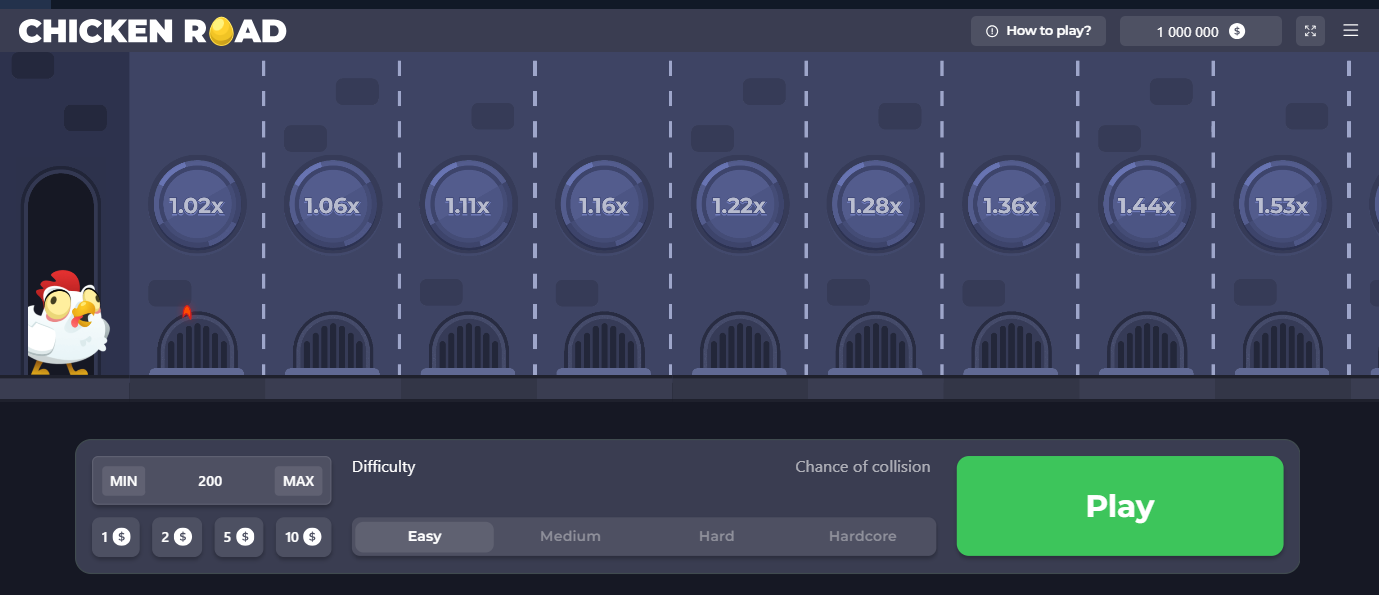
Chicken Road is a video slot developed around a farmyard theme. Its special symbols fuel both base-game value and bonus potential. Understanding how each symbol functions, how often it appears, and how it connects with the paytable helps any player evaluate the game’s risk profile and payout rhythm. This article analyzes the mechanics behind the symbols, their contribution to RTP and volatility, and the practical implications for bet sizing and session planning. By zeroing in on verifiable rules rather than marketing claims, readers can decide whether the slot’s structure matches with their preferred style of play.
Scatter Icon Triggers and Free-Spin Entry Conditions
The scatter symbol is the primary gateway to the bonus feature, and its appearance is unrelated of payline alignment. Three plus scatters landing anywhere on the reels trigger a fixed number of free spins, with the exact quantity scaling based on the number of scatters present. Because scatters pay regardless of position, the probability calculation varies from line-based symbols, and the game’s information screen commonly lists both the trigger threshold and the matching free-spin allocation. This transparency allows players to calculate how many base-game spins are theoretically required to enter the bonus round under normal reel weighting.

Scatter frequency also influences the game’s overall RTP distribution. A share of the theoretical return is reserved for the free-spin mode, so the base game’s RTP looks lower when assessed in isolation. Players who favor longer sessions without constant feature entry may find the scatter interval irritating, whereas those who see the bonus as the main value driver can tolerate the slower base-game pace. Reviewing the published scatter odds, when accessible, provides a concrete reference point rather than relying on anecdotal session length.
Betting Range, Coin Sizes, and Top Win Potential
Chicken Road supports a wide bet range that commences at a minimal minimum stake and reaches to a point fitting for gamblers pursuing greater absolute returns. The coin-value selector changes the credit cost per line or per way, and the total bet is shown transparently before each spin. Because the maximum win is expressed as a multiple of the total bet instead of a set currency amount, players can scale their exposure while the theoretical ceiling stays proportionally constant. This structure benefits careful bankroll allocation more than aggressive step betting.
The maximum win figure is achieved through a blend of high-value symbol alignment and the upper multiplier tier during free spins. Attaining this ceiling needs a low-probability sequence, and the game’s rules explicitly state that the payout is capped even if further retriggers occur. For players who monitor volatility, the distance between median outcomes and the maximum serves as a practical indicator of session variance. Those who choose steady, smaller returns may select a lower stake to extend playtime, while others may accept higher variance in quest of the top multiplier combinations.
How Special Symbols Define Chicken Road’s Core Gameplay
Special symbols in Chicken Road aren’t decorative. They immediately modify reel outcomes and dictate when the game transitions from standard line evaluation to enhanced features. The game employs a five-reel layout with a fixed set of paylines, and the symbols that carry the highest payouts are the ones that occur least often in the base cycle. Because these symbols also activate or enhance bonus rounds, their distribution across the reels affects both hit frequency and average return per spin. Players who review the paytable before adjusting stakes can recognize which combinations demand the largest bet multiples to turn into meaningful and which combinations can show up often enough to sustain shorter sessions.
The interaction between special symbols and the base game also influences perceived volatility. When a high-value symbol lands on adjacent reels but misses the final position, the near-miss can generate tension without delivering a payout. This pattern contributes to the game’s medium-to-high volatility rating. Conversely, lower-value special symbols that replace others can smooth out dry spells by completing smaller line wins. This dual role means that symbol frequency data, which some casinos release in the information panel, becomes a practical reference point for calculating how many spins might be needed before a notable return occurs.
Hands-on Session Planning Driven by Symbol Behaviour
Efficient session planning begins with aligning stake size to the expected frequency of special-symbol appearances. Because wilds and scatters appear on predetermined reel strips, players can estimate how many spins are expected to pass before a feature trigger or a meaningful line win occurs. Setting a stop-loss and a win target in advance prevents emotional adjustments when the base game produces lengthy dry spells, a common characteristic of medium-to-high volatility titles.
Another concrete step is to confirm the current RTP and volatility classification on the game’s information screen before allocating funds chickensroadcasino.com. Some platforms display these figures directly, while others demand players to open the help menu. Knowing the RTP contribution from the base game versus the bonus rounds explains whether short sessions or extended play more suitably matches the game’s payout rhythm. Players who treat these metrics as fixed parameters rather than marketing statements can make more reliable decisions about when to raise or lower their bet.
Keeping a simple record of feature entry intervals and average return per bonus round provides empirical feedback that no paytable can supply. Over a few dozen sessions, patterns appear that either confirm or challenge the theoretical distribution. This feedback loop turns symbol knowledge into a functional advantage, allowing players to fine-tune expectations and bankroll allocation without relying on anecdotal impressions.
Multiplier Mechanics Throughout Bonus Rounds
As soon as free spins begin, additional multipliers become active and may apply to any win that takes place within the round. These multipliers are not uniform. They can appear as static values on specific symbols or as random increments applied to the entire spin. The cumulative effect is that a single high-value combination during free spins can go beyond the largest base-game payout by a significant margin. This constitutes the primary reason the game shows a maximum win figure well above the top line in the base paytable.
The multiplier system is limited, however, so repeated free-spin retriggers don’t generate infinite escalation. Instead, each retrigger contributes a fixed number of spins while the existing multiplier framework stays intact. This design choice maintains the upper payout boundary predictable and prevents the game from entering a mathematical state where a single retrigger sequence might theoretically surpass the stated maximum. Players calculating bankroll requirements should factor the capped multiplier into their session planning, because the most probable large outcomes arise within a narrow band rather than at extreme long-tail values.
Relationship Between Multipliers and Symbol Values
During free spins, the same symbols that reward in the base game keep their relative hierarchy, yet each win is scaled by the active multiplier. This scaling means that even mid-tier symbols can yield substantial returns when the multiplier attains its upper range. The paytable therefore lists two sets of values: one for the base game and one for the bonus round, allowing players to cross-reference the uplift factor directly. Understanding this relationship clarifies why the game’s volatility feels higher once the feature is triggered, even though the underlying reel strips are not altered.
Reel Layout, Active Lines, and Winning Combinations
The five-reel grid follows a conventional left-to-right reading, even though some lines enable right-to-left or both-ways payments when particular symbol types arrive. The count of active paylines is constant, which simplifies stake computation but also signifies that every spin encompasses the same group of combinations without regard to bet size. This uniformity enables players to evaluate outcomes across different stake levels without modifying for variable line counts.
Winning combinations necessitate three or more matching symbols on consecutive reels along an active line, with the highest symbol determining the payout tier. Since the game does not use a ways-to-win engine, line placement counts, and symbols that land on the edges of the grid may complete fewer lines than those holding central positions. Examining the line diagram in the information panel displays which patterns generate the most frequent small wins and which patterns are set aside for the rarer, higher-value outcomes.
Wild Symbol Arrangement and Substitution Rules
The wild symbol in Chicken Road appears on reels two through five and substitutes for all standard paying symbols but not for scatter symbols or bonus icons. Its location is deliberately restricted to prevent trivializing the game’s premium combinations. This ensures the highest payout tier reliant on natural symbol alignment instead of wild support. When a wild arrives in the center of a potential line, it can fill several paylines concurrently, particularly on configurations where paylines zigzag across the reels. This multi-payline feature is one reason why the game’s hit rate remains reasonable although the premium symbols are fairly uncommon.
Wilds can also bear an step-up multiplier in particular reel locations, even though the multiplier amount is conservative and is limited to the line or ways payout that features the wild. Given that the multiplier is set as opposed to progressive, it does not increase across back-to-back spins. This prevents the main game from generating unusually large payouts apart from the dedicated bonus rounds. Players who monitor their outcomes over hundreds of spins can check whether the wild multiplier contributes a quantifiable increase to their total return or as to whether it acts primarily as a hit-rate stabilizer.